


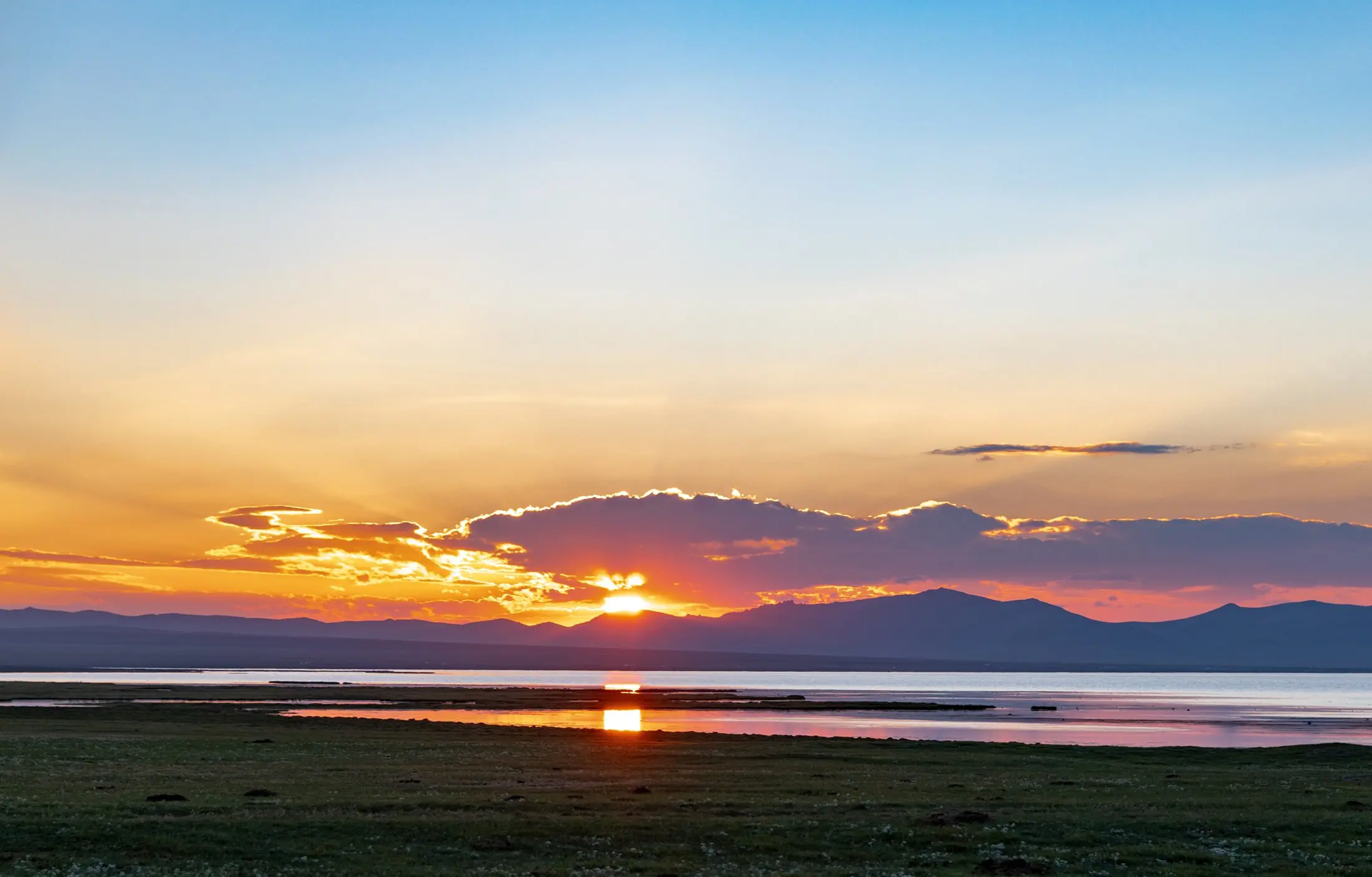
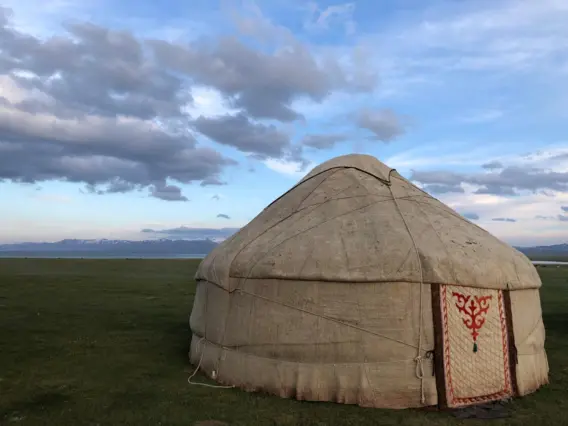
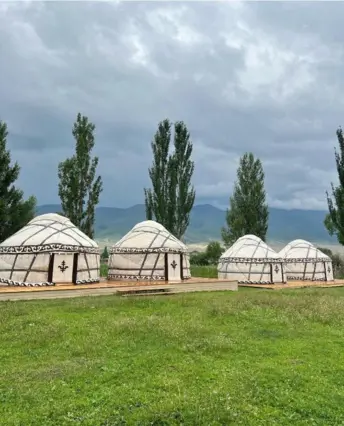
At Son-Kul, you may find yourself stepping out of the yurt before breakfast. Horses graze beside the water, and mountains rise beyond the far shore. You could walk for a while. You could sit down with your tea. In the heart of Kyrgyzstan, an unhurried morning can become the part of the journey you remember best.
Naryn Region gives you room for several kinds of trip: a night on the summer pastures, a walk beneath the stone vaults of Tash Rabat, a forest hike or an afternoon watching felt makers at work. Summer is the easiest time to combine the lakes and high passes. Choose a few places and leave space between them: the roads deserve some of your attention too.
Son-Kul: stay for the morning
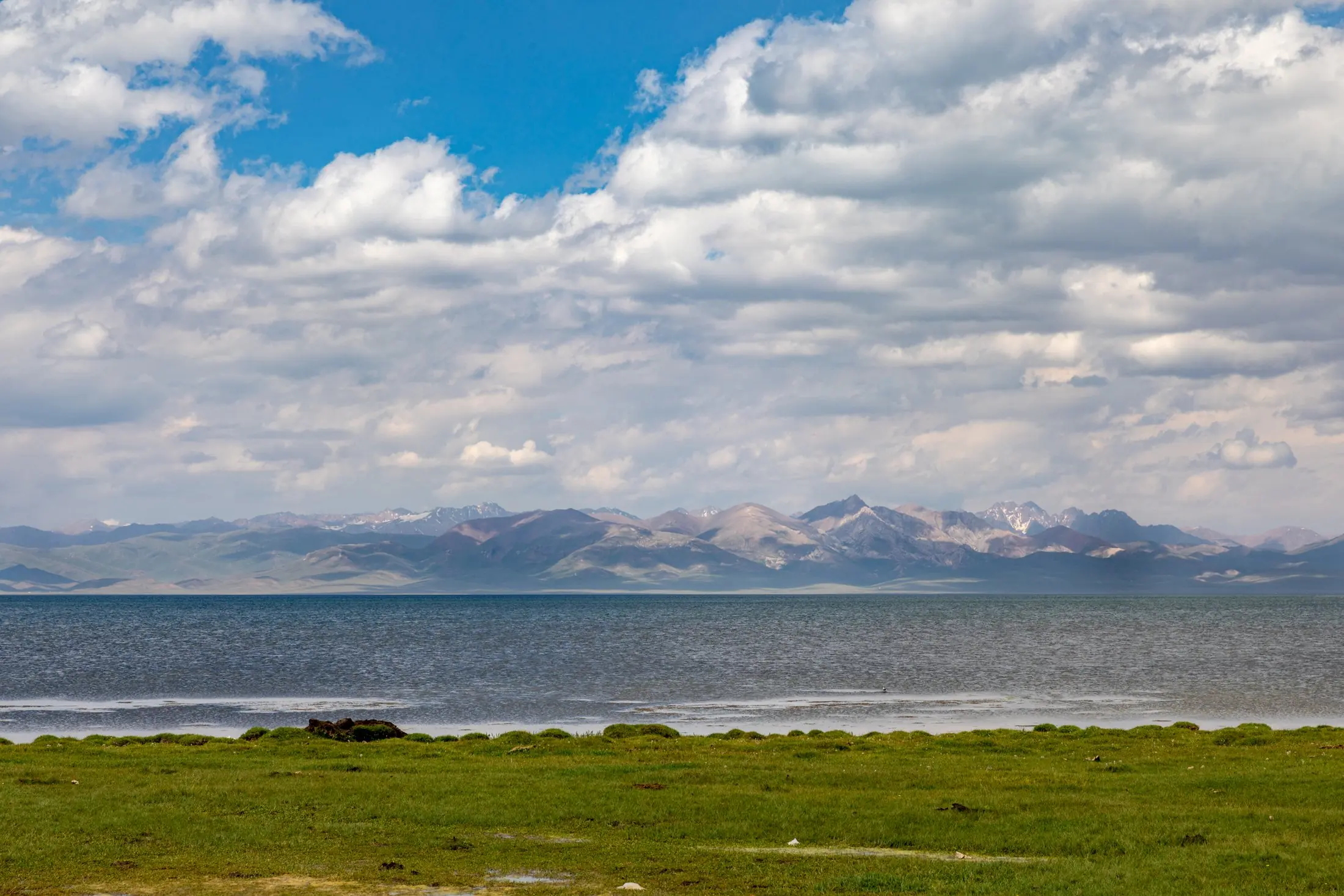
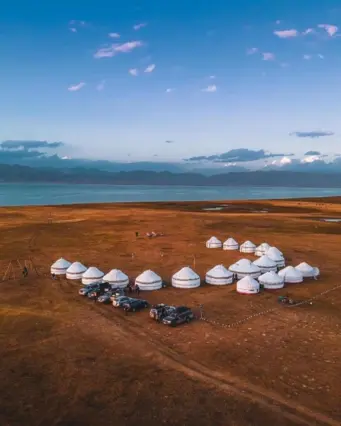
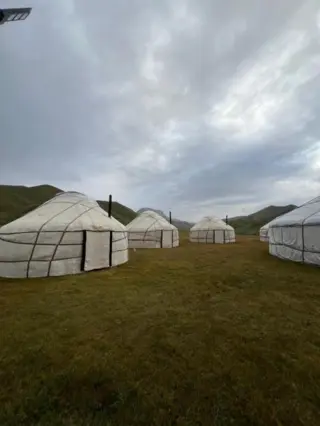
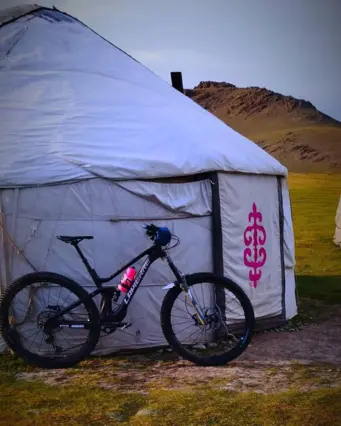
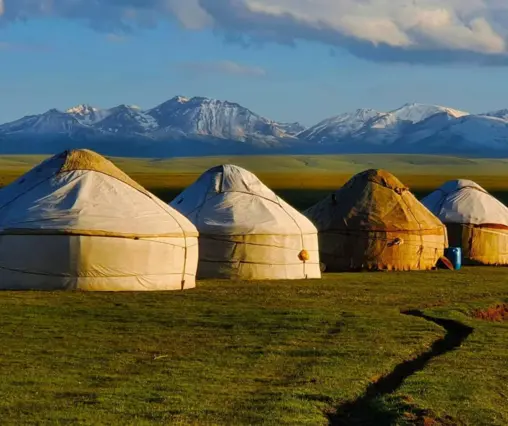
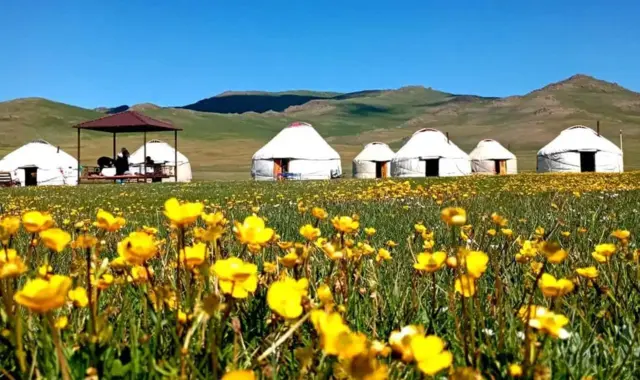
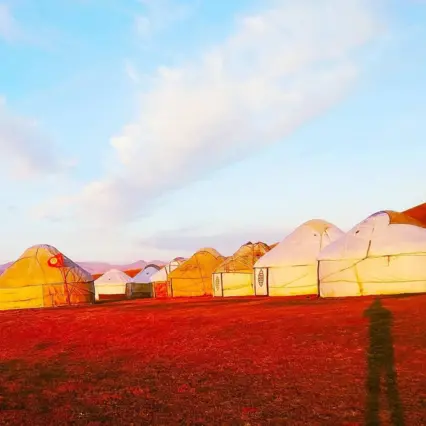
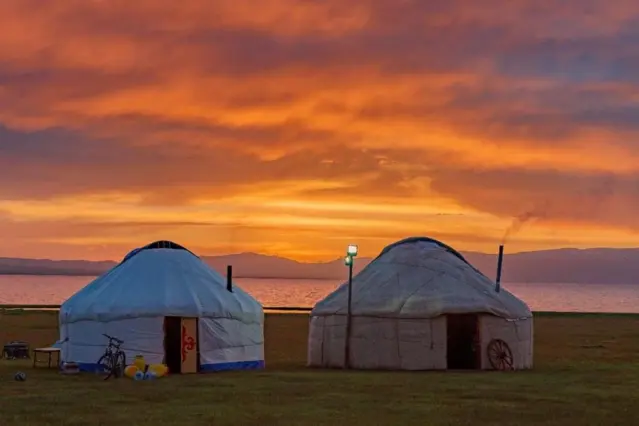
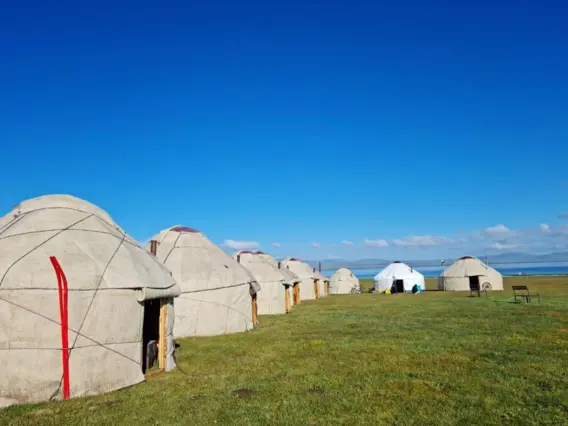
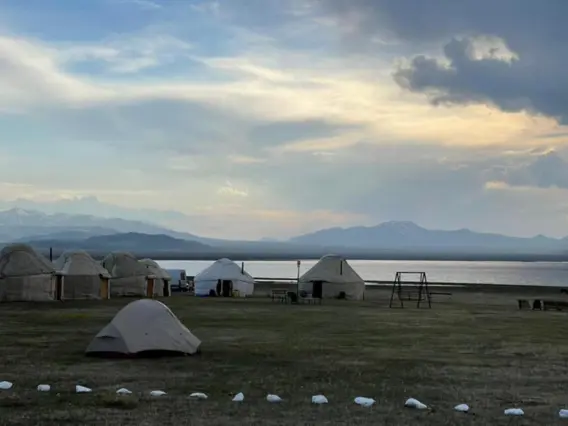
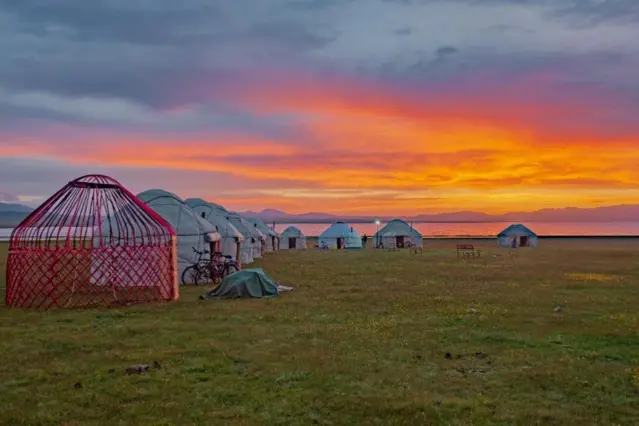
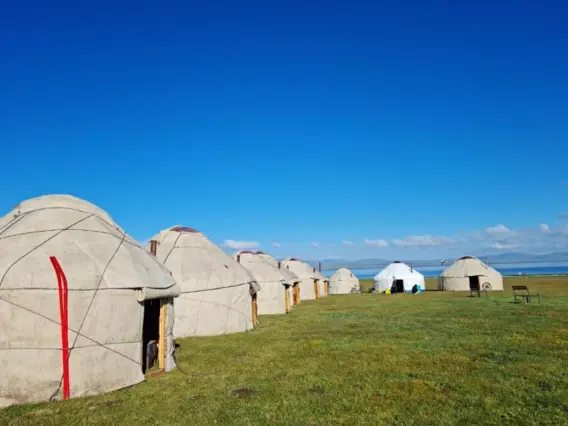
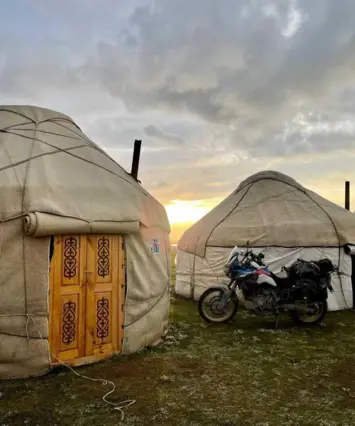
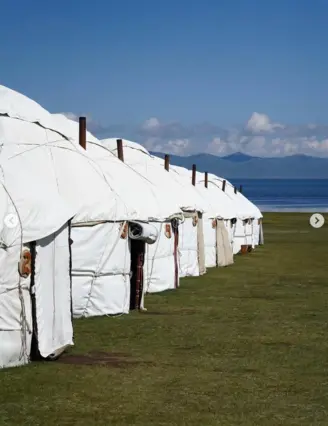
The road climbs through mountain passes before the lake opens out ahead. Water, short grass, a wide horizon. The yurts seem small against all that space.
Families bring their animals to these summer pastures, known as jailoos. Beside the visitor camps, daily work continues: mares are milked, foals watched over and tea shared. Ask your hosts about trying kymyz, fermented mare's milk, or arranging a horse ride. A family’s working day deserves consideration; ask before joining in or taking photographs.
Stay at least one night if your schedule allows. It gives you an evening walk, changing light on the water and a morning without a return drive immediately ahead.
Plan your visit. The lake is about 3,000 metres above sea level. July and August are the warmest months; June and September depend more on weather and individual camps. Allow roughly three to four hours from Kochkor, with a vehicle chosen for the route and current conditions. Check heating, toilets and hot water before booking. More detail is in a night in a yurt.
Kochkor: spend an afternoon with the felt makers
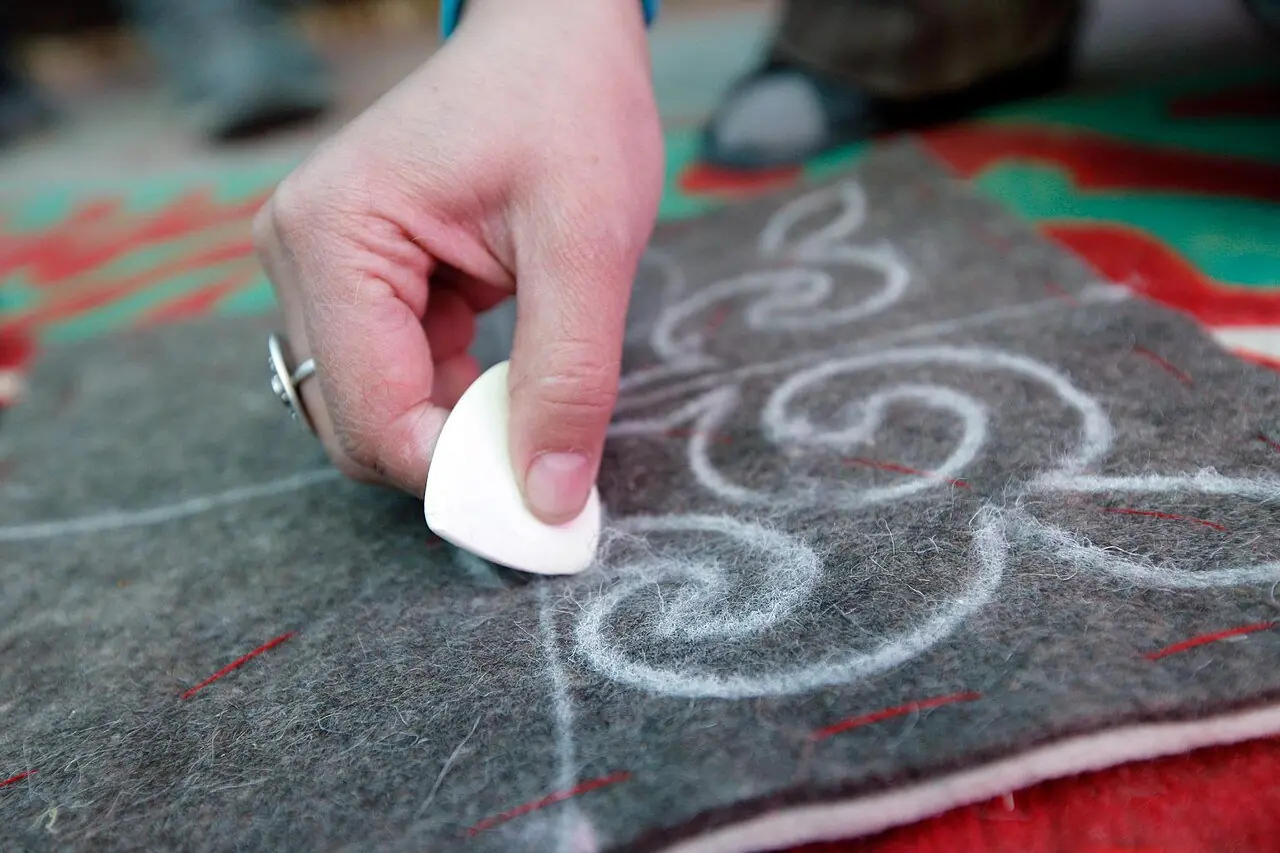
Give Kochkor a little time before heading into the mountains. At a felt workshop, a carpet becomes more than a colourful thing to take home. You begin to notice the cutting, joining and stitching behind its patterns, and the hands that give each piece its shape.
The Altyn Kol women's handicraft cooperative is based here. Arrange a workshop visit or class ahead of time. It is an opportunity to ask questions and learn how a shyrdak, a patterned felt carpet, is made.
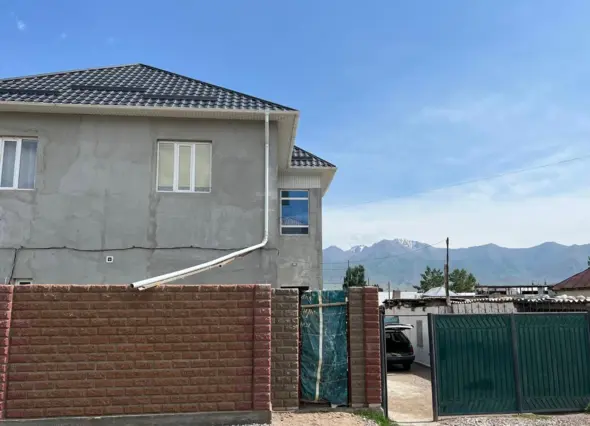
Kochkor is also a useful place to sleep before Son-Kul or Kol-Ukok. If you have a fixed departure date, arrange your onward transport before arriving.
Kol-Ukok: walk to a mountain lake
For a trip built around walking, look at Kol-Ukok. The approach follows a mountain valley, giving you time to watch the slopes change as you climb. Reaching the water feels like arriving somewhere under your own steam.
Start from the Kochkor area and agree on the trailhead, ascent and overnight arrangements with a local organiser. Two-day walking itineraries exist; continuing to Kol-Tor adds effort. Horseback approaches are another option. Distance depends on where your vehicle can drop you, so choose the route before judging its difficulty.
Naryn town: make time for the river and dinner
Mountains appear between the buildings of this river-valley town. After nights at the lakes, it is a pleasant place to slow down: walk where there is easy access to the river, have dinner and sleep before the next drive.
Ask your guesthouse where to try beshbarmak, a meat-and-noodle dish, and what is being cooked that day. Leave time for the conversation as well as the meal.
Naryn is a practical starting point for Tash Rabat, Kel-Suu and nearby valleys. Before leaving, withdraw cash, buy supplies, charge your devices and download maps. Kyrgyz and Russian are widely used; English is more common in tourism services than in everyday roadside encounters.
Salkyn-Tör: a day among the spruce trees
After the open lake shores, the trees feel especially welcome. Tien Shan spruce grows on the slopes of Salkyn-Tör, with mountain meadows higher up. Take time to linger in the shade and look up through the branches.
The nature park is about 20 kilometres east of Naryn. Choose a walking area to suit your fitness, and check entry arrangements, available routes and return transport locally. A day in the park can fit between longer mountain journeys.
Eki-Naryn: up to the pastures
Eki-Naryn offers another reason to put on your walking shoes. A route described by local CBT starts at a yurt camp beyond the village, climbs above the tree line and reaches open pasture country. Choose a shorter walk or continue farther according to your preparation.
Confirm the trailhead, access road and current path conditions before setting out. The valley contains different routes; its name alone does not tell you how demanding a walk will be.
Tash Rabat: step beneath the stone vaults
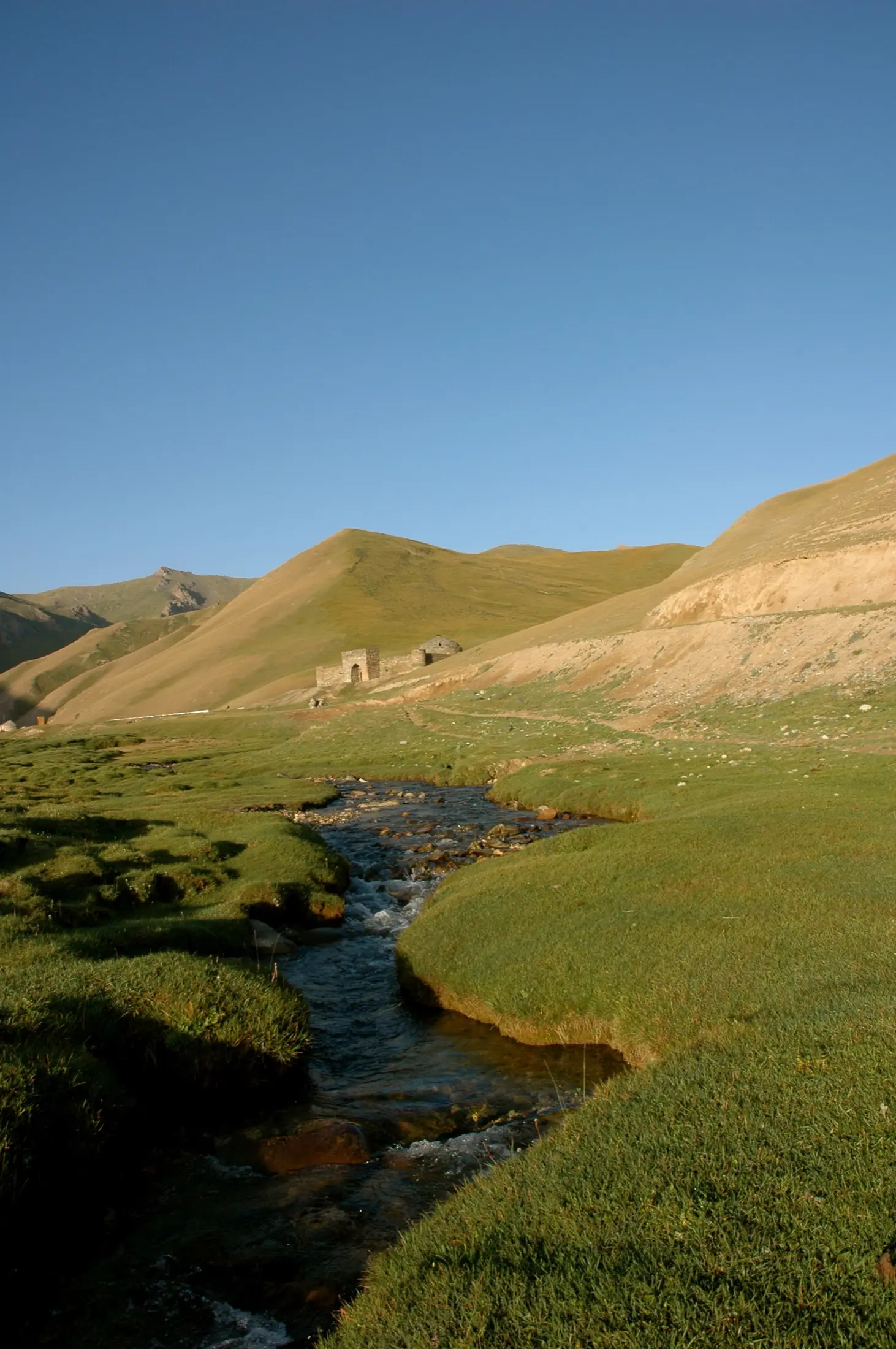
A low stone building with a dome stands in a valley in At-Bashy district. Outside is open country and bright light. Inside, your eyes slowly adjust to cool, dim rooms and passages.
Tash Rabat is known as a caravanserai on a route through the Tien Shan; its earlier history and original purpose remain debated. Standing beneath its roof, it is easy to imagine the relief of shelter after a long mountain crossing.
After looking inside, walk into the surrounding valley. From farther away, the building grows small against the slopes, and its setting becomes part of the visit.
Plan your visit. Arrange transport from Naryn or At-Bashy. Summer and early autumn are generally the easiest seasons, subject to road conditions. At roughly 3,200 metres, warm clothing is useful even on a sunny day. Ask ahead about overnight accommodation nearby.
Koshoy Korgon: trace the outline of a fortress
Near Kara-Suu village, earth walls mark the remains of Koshoy Korgon. Follow their outline with your eyes and imagine the enclosed space before looking back out into the valley.
It is a worthwhile historical stop on a journey towards Tash Rabat. Give the earthworks a little time: their scale is easier to appreciate when you pause than when you take a quick photograph from the road.
Shaar Waterfall: give the trail its own day
The approach to Shaar follows the Bash-Kaindy gorge towards a waterfall dropping from a high rock face. The valley walk is part of the attraction, with river scenery and pastures along the way.
Treat this as a substantial outing. A local operator describes approaches taking roughly four to five hours each way, depending on the starting point and pace. Agree on a long walking day or a suitable overnight itinerary with a guide. Summer is the main season; weather, water crossings and trail conditions need checking before departure. Horseback options also require an honest assessment of riding experience.
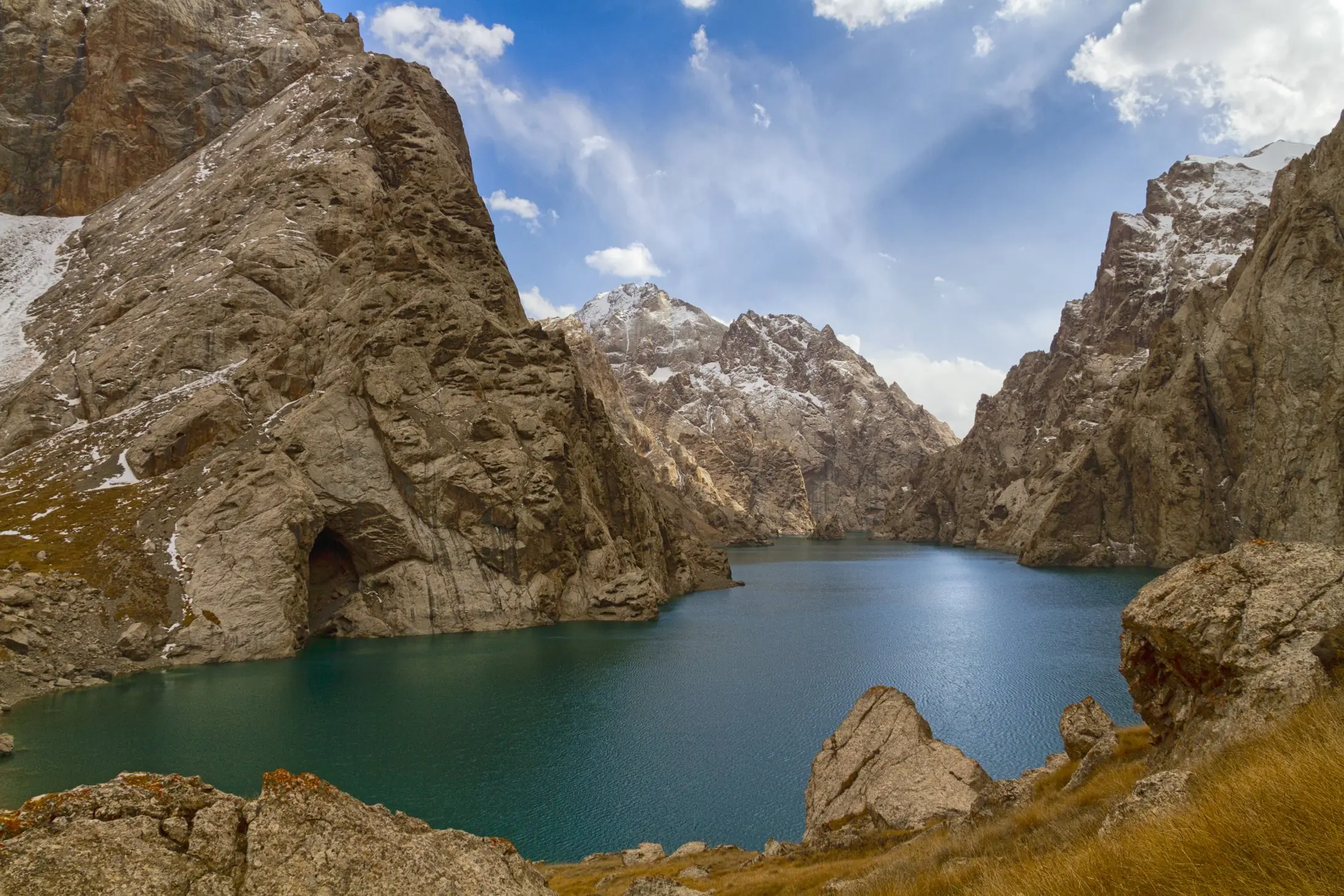
Kel-Suu: water between sheer cliffs
Kel-Suu feels enclosed and dramatic after the wide shores of Son-Kul. Rock walls rise above the water, and your eyes follow the lake towards bends you cannot see around.
Allow separate days for the journey through the high valleys, a night at camp and the approach to the lake. The final section can be walked or ridden, with distance depending on the camp and route.
Plan your visit. The lake lies at about 3,500 metres near the Chinese border. You need suitable transport and a border-zone permit arranged in advance. Confirm the camp location, walking time, documents and return journey with your organiser. A single distance quoted from “the yurt camp” is not enough to plan by.
Chatyr-Kul and the road to Torugart
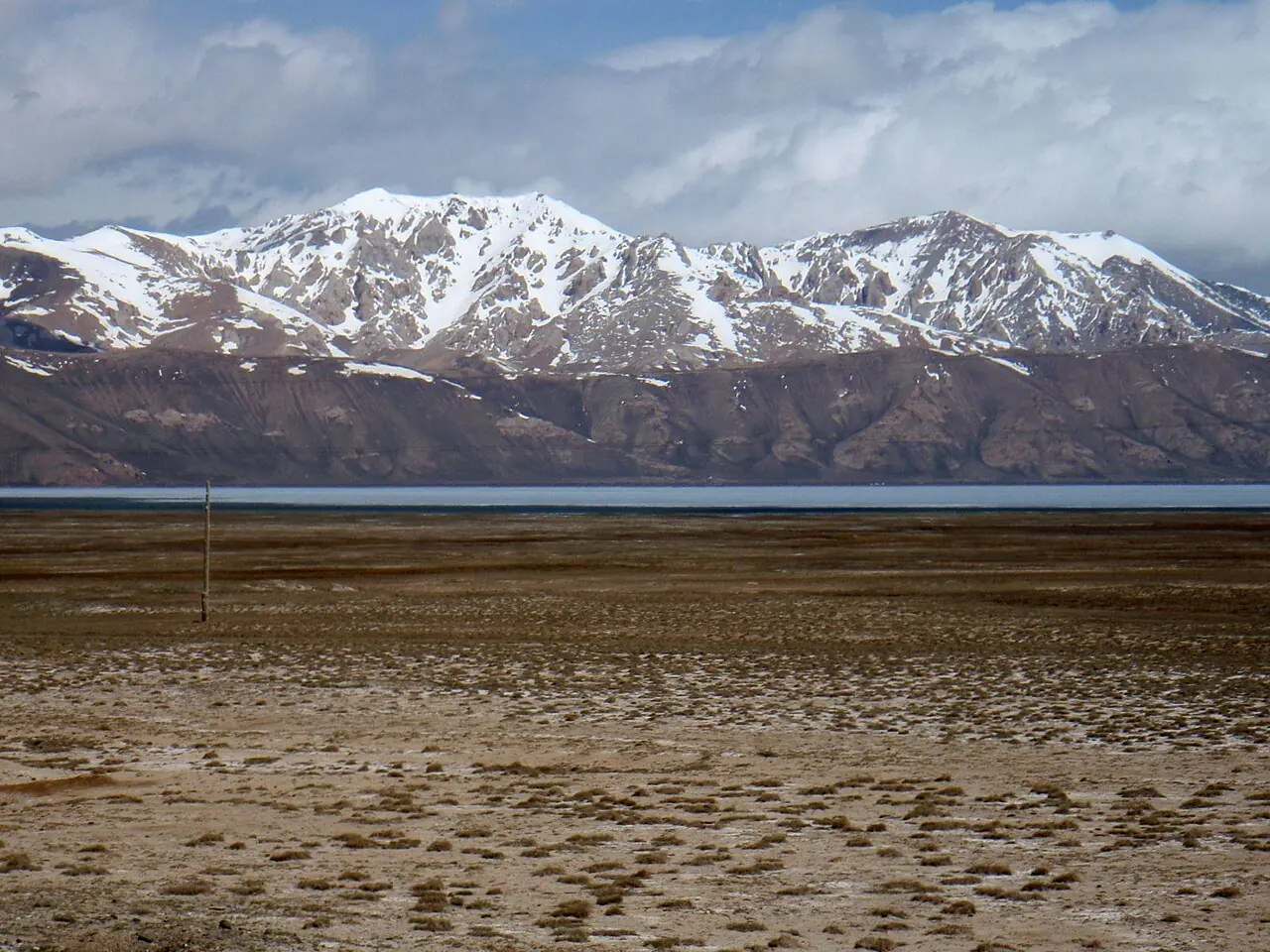
Chatyr-Kul lies in open high-country scenery in the south of the region. Consider it as a separately planned part of your trip, with time to appreciate the lake's setting.
The area has both conservation and border restrictions. An organiser must check permitted access, the intended route and necessary permissions. A visit to the region does not guarantee access to the shore.
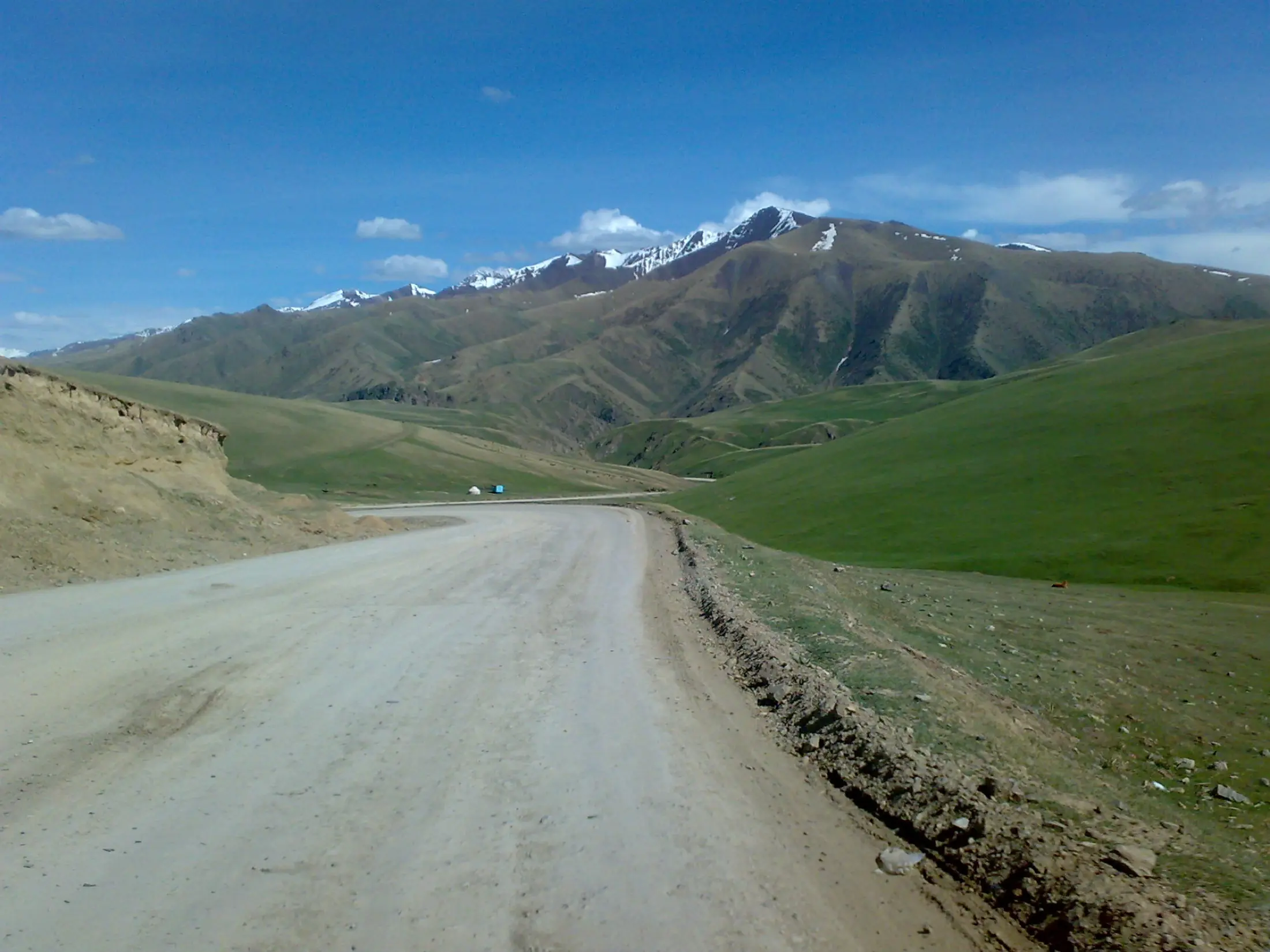
The road continues towards Torugart and China. Crossing the international border requires separate planning: a Kyrgyz border-zone permit does not replace Chinese entry documents or arrangements for the crossing itself. Check the requirements for your nationality and travel date.
Choose a trip that leaves room to stop
Build your route around what you most want to do. Kochkor and Son-Kul suit a pasture-and-yurt trip. Kol-Ukok offers an overnight hike. Naryn with Salkyn-Tör or Eki-Naryn works for separate walking days based in town. Combine Koshoy Korgon and Tash Rabat for history and mountain scenery. Give Shaar its own hiking time and Kel-Suu its own excursion.
These are combinations, not a fixed timetable. Include travel from Bishkek, the return journey and weather flexibility. Arrange permissions for restricted areas before committing the rest of your itinerary.
Season, arrival and practical details
July and August offer the most straightforward first visit to the lakes and summer pastures. June and September depend more on snow, roads and camp opening dates. Naryn town can be visited outside summer, but winter needs a different itinerary and preparation for severe cold.
From Bishkek, Naryn is about 320 kilometres away. Around five hours is a driving estimate without long stops; allow more room in your schedule. Public transport serves Naryn and Kochkor, with departure points and times to be checked before travel. Arrange onward mountain transport, including pickup and waiting, in advance.
If flying into Bishkek, allow a rest stop before heading into the high country. A night in the capital can help break up the journey; see where to stay in Bishkek. Give yourself time for gradual ascent before demanding high-altitude days.
Bring warm layers, rain and wind protection, sun protection and footwear suited to your chosen trail. Ask camps about bedding and heating. Carry cash beyond the towns, download maps and agree on your return transport before losing mobile coverage.
For a journey continuing towards the lake district, see north or south shore of Issyk-Kul.
Where to stay
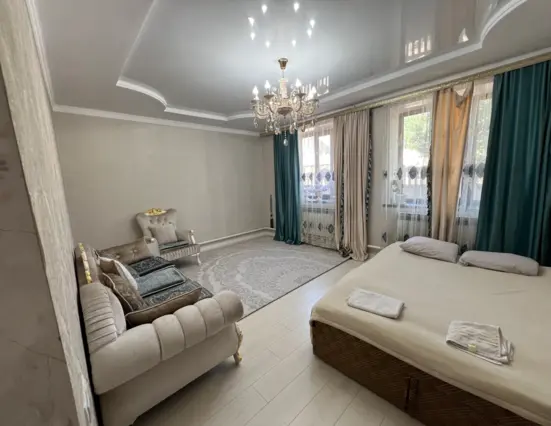
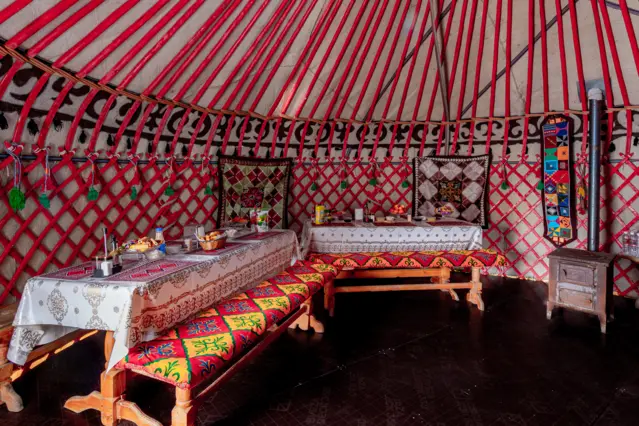
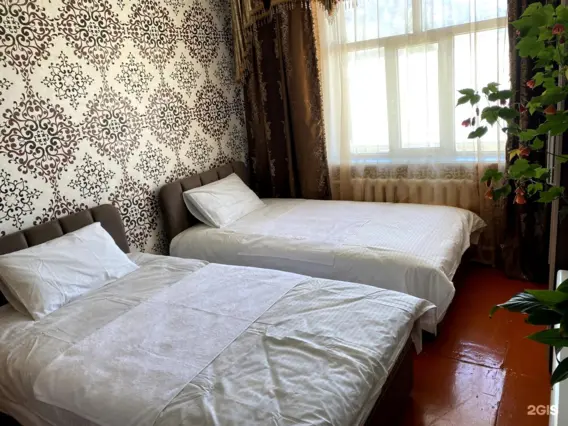
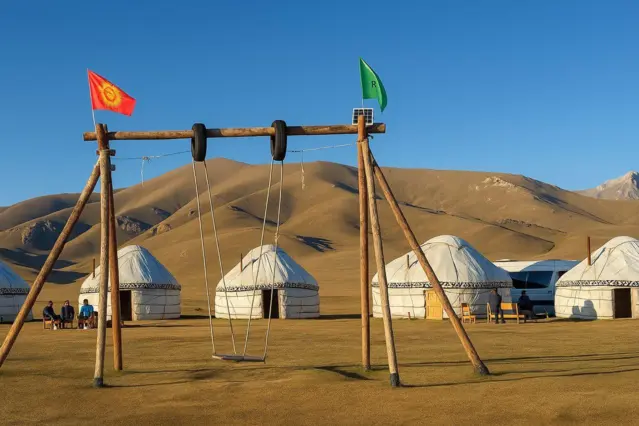
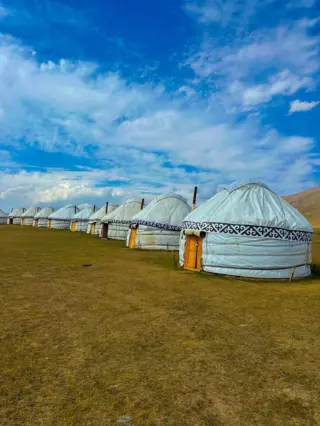
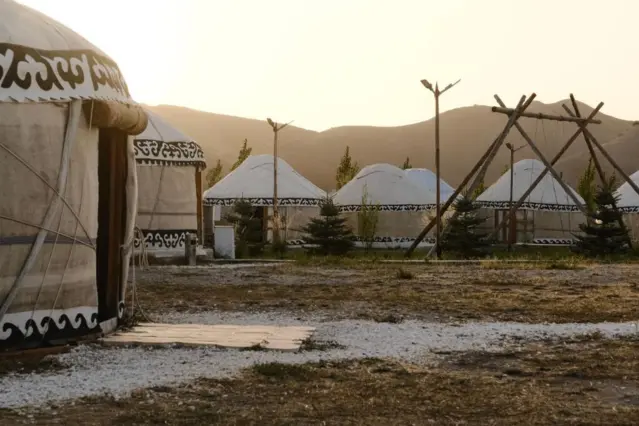
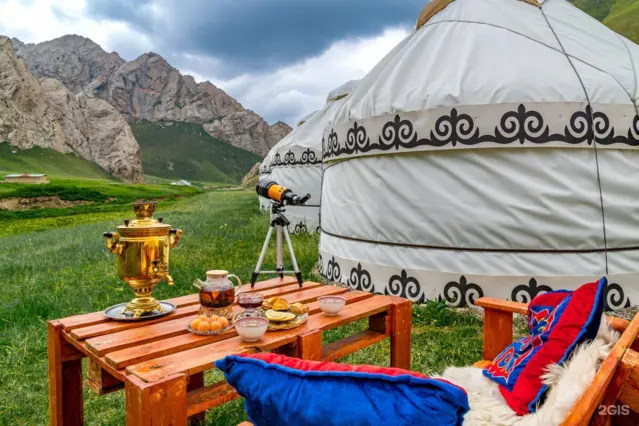
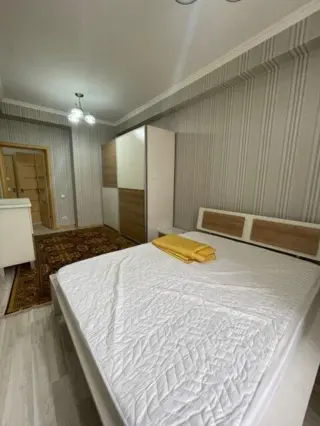
Sleep in Kochkor before Son-Kul or Kol-Ukok; use Naryn for nearby walks and the southern part of the region. A yurt at Son-Kul lets you stay beside the water.
Format | Where | Price per night from |
|---|---|---|
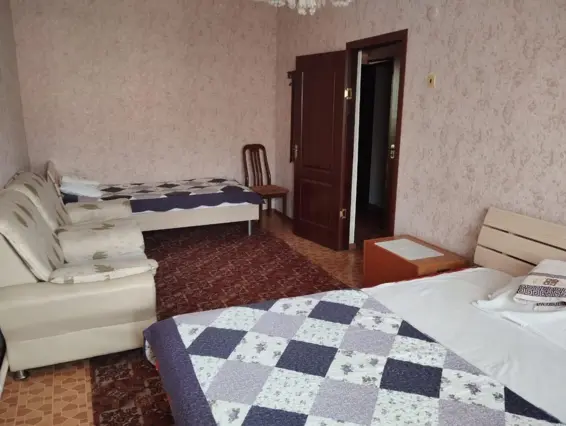
Bed in a guest house | Kochkor | 900 som (~10 $) |
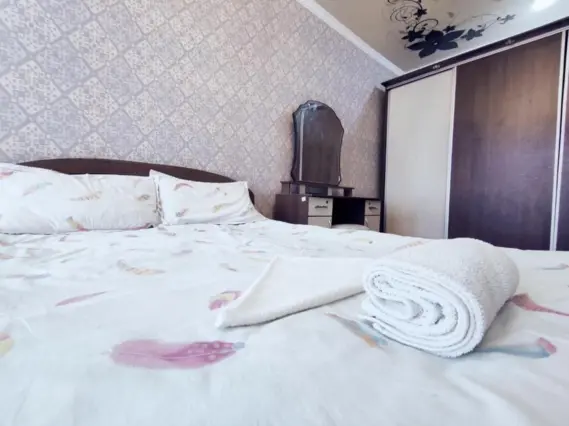
Room in a guest house | Naryn town | 1,150 som (~13 $) |
Hotel room | Naryn town | 1,500 som (~17 $) |
Bed in a yurt | Son-Kul | 1,500 som (~17 $) |
Two-person yurt | Son-Kul | 3,000 som (~34 $) |
Yurt in a camp with restaurant and sauna | southern shore of Son-Kul | 7,500 som (~86 $) |
Prices were checked in the listings on 17 October 2026; dollar figures use the National Bank rate, rounded. For your dates, check the listing — availability and price change.
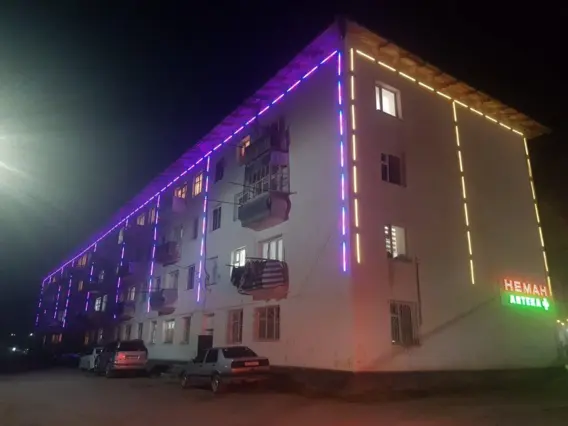
Browse the choice: places to stay in Naryn and yurts in Naryn Region. In the town itself you will find guest houses, small hotels and a few apartments; across the region, yurts at Son-Kul, in Ak-Talaa district, At-Bashy and Kyzart.
Worth confirming before you book: whether meals are included (guest houses often include breakfast, yurt camps sometimes full board), whether there is heating and hot water, and whether the host can arrange a car to the lake — many can, and it saves you a day of planning.
How booking works
You send a request and the host confirms it. After confirmation you have two hours to pay the deposit; the rest is paid at check-in. For visitors, payment by Visa on the bank’s secure page is the practical option. Details are in the booking help page.
Leave at least one morning free. You may want another walk to the shore, or another cup of tea before leaving. Give the places you came so far to see a little of your time.
Cover: sunset at Son-Kul. Photo: Ninara, CC BY 2.0; resized, not cropped.
New photograph sources and licences: son-kul-sunset — Ninara from Helsinki, Finland, CC BY 2.0; son-kul-lake — Ninara from Helsinki, Finland, CC BY 2.0; kochkor-felt — Land Rover MENA, CC BY 2.0; kel-suu-cliffs — Калачев Сергей, CC BY 3.0; chatyr-kul-mountains — Raki_Man, CC BY 3.0.


 Kochkor

no comments