


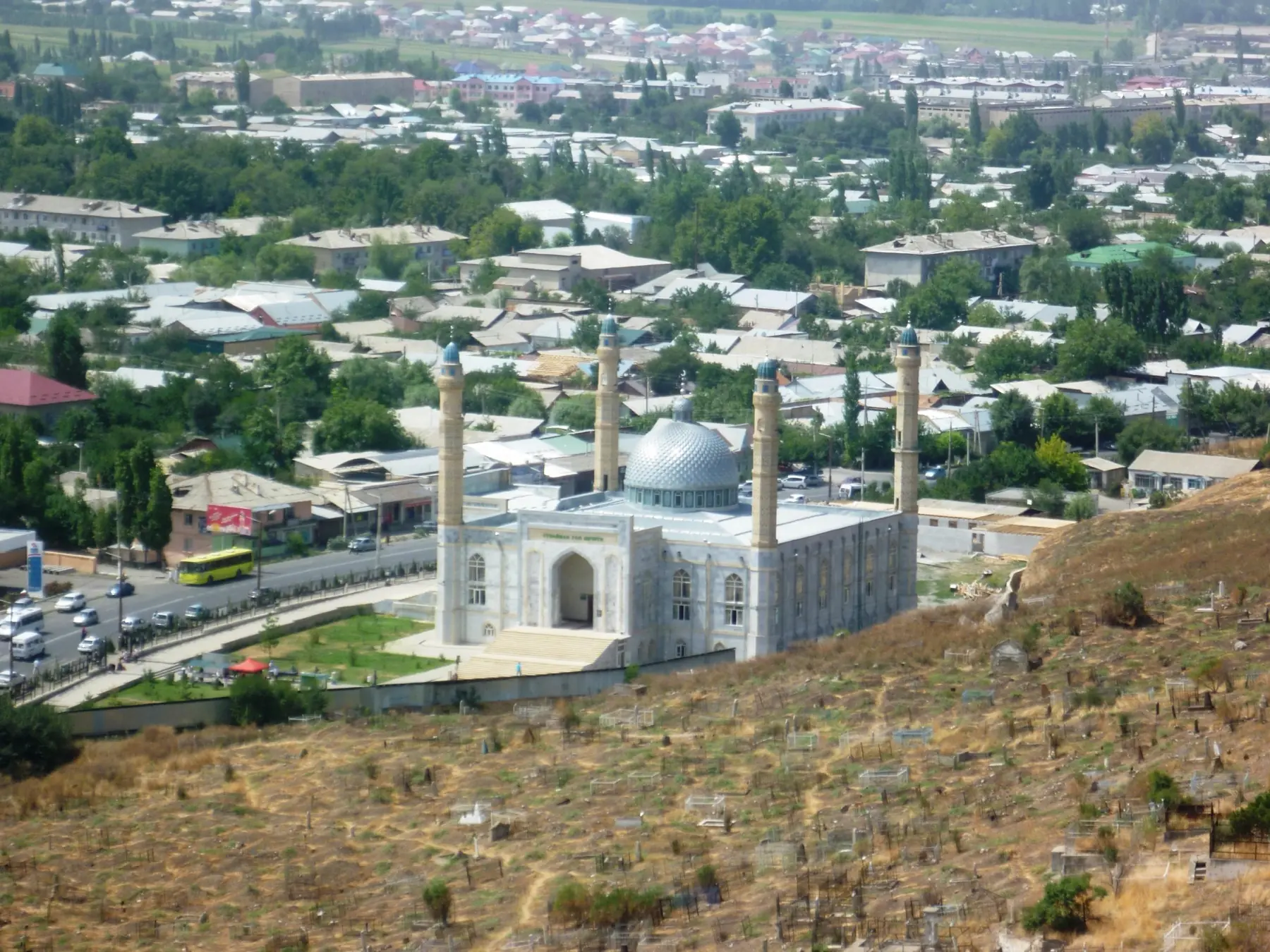
Most travellers pass through Osh rather than stay in it: a stop on the way to Uzbekistan, a night before the drive onto the Pamir Highway. That is the mistake. A mountain worshipped for several millennia stands in the middle of the residential blocks here, and the minaret of a Karakhanid capital is fifty kilometres away.
Allow two days for Osh and a trip to Uzgen. Plan Arslanbob as a separate extension with an overnight stay. Here is what to see and how to organise your time.
Sulayman-Too
You can see the mountain from almost anywhere in Osh, and that is literal: it stands inside the city, between ordinary streets. It has been on the UNESCO World Heritage list since 2009, described there as the most complete example of a sacred mountain anywhere in Central Asia, worshipped over several millennia. Some researchers identify it with Ptolemy's Stone Tower, the marker of the midpoint between Europe and Asia.
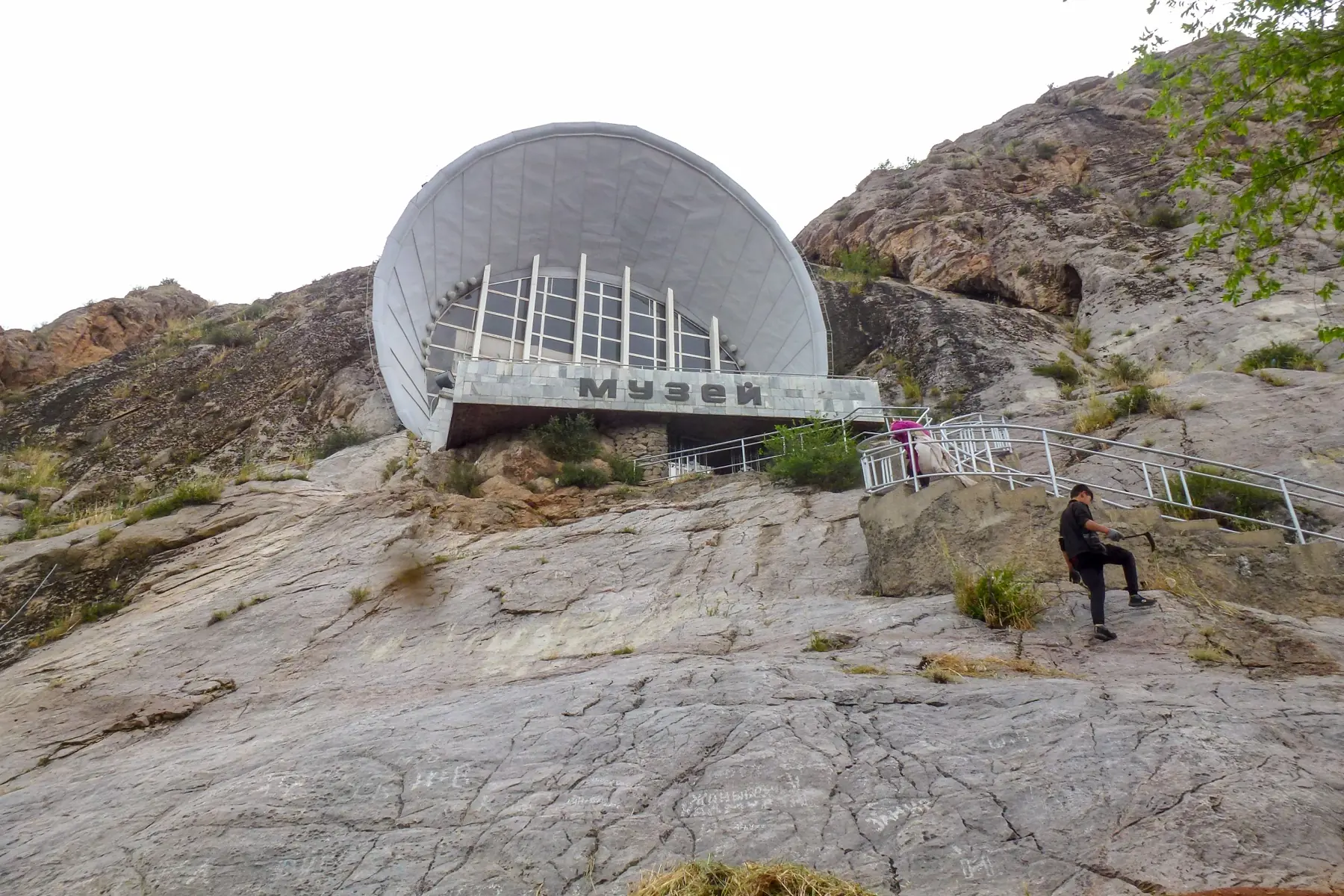
A mosque built by Babur in 1510 — the same Babur who later founded the Mughal Empire — stands at the top. Below it, cut into the rock, is a museum complex whose entrance leads inside the mountain. That is the strangest and the most memorable part of the walk: the museum is neither at the foot nor on the summit, but in the body of the mountain itself.
Climb in the first half of the day, before the heat, and leave time at the top. From up there you see the whole city and the valley behind it, and that is the real answer to why you would stop in Osh at all.
The city around the mountain
Osh is older than almost everything around it: over 3,000 years, a centre of silk production from the 8th century, and a caravan stop for most of that time. It is not an open-air museum but a working southern city, and it is better walked without a checklist.
For a market visit, head to the new municipal Kelechek bazaar on Bekmamat Osmonov Street. The city administration announced its opening on 11 May 2026: it has more than 1,300 trading spaces and a separate fruit area. Tell your taxi driver you want the new municipal Kelechek market on Osmonov Street. The former central bazaar along the Ak-Buura is a different address: in August 2026, the city announced plans for a cultural and tourism complex on that site.
Uzgen: a minaret and three mausoleums
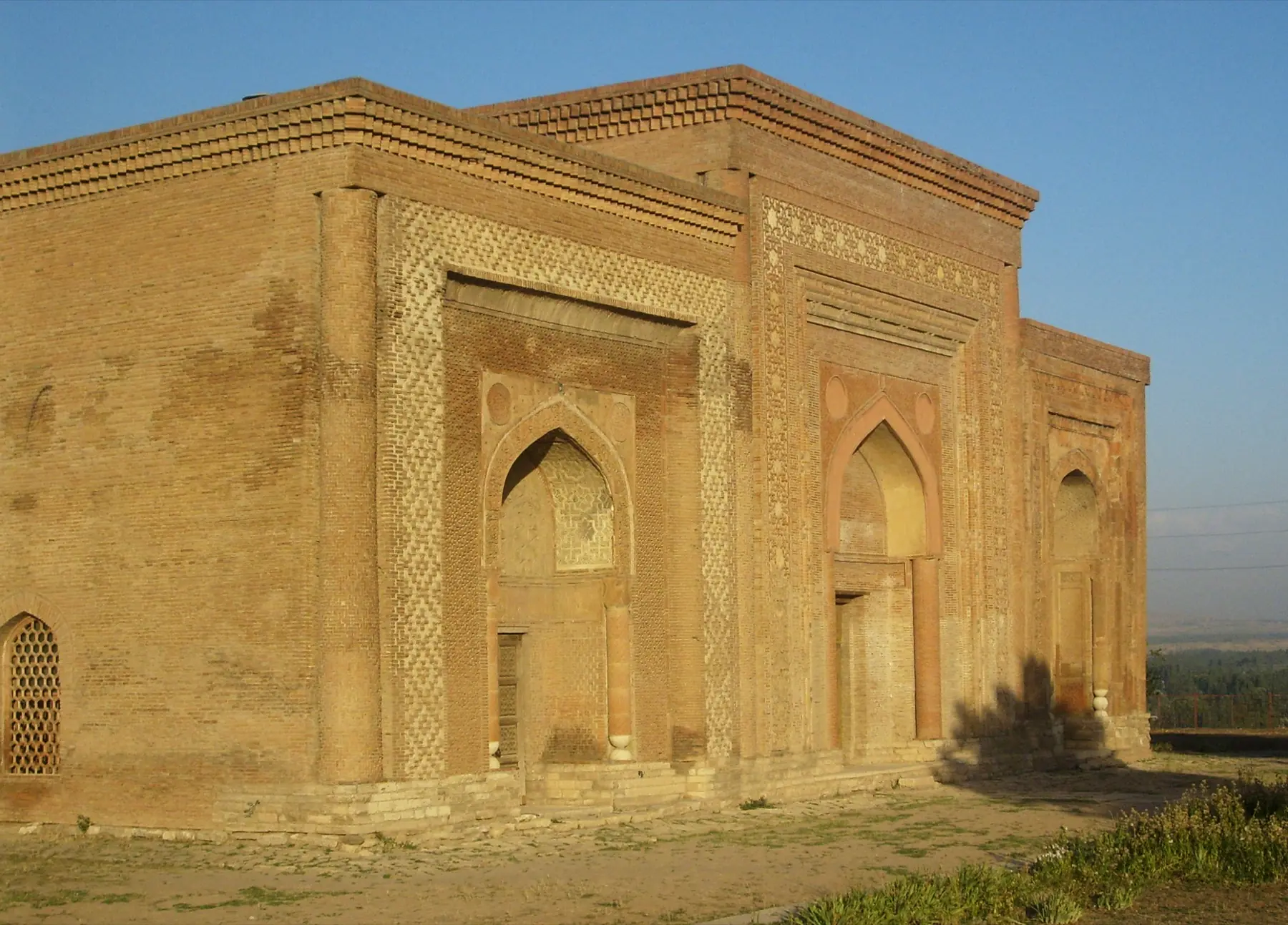
About fifty kilometres north-east of Osh lies Uzgen, the second capital of the Karakhanid state in the 12th century. What is left from that period is an architectural complex of the 11th and 12th centuries: a minaret and three mausoleums built against each other, holding rulers of the dynasty.
It is a half-day trip, and it turns the Fergana Valley from an abstraction into something concrete. The Silk Road stops being a phrase here: there is the tower, there is the carved brickwork, there were the people who lived off that route a thousand years ago.
Kara-Koy: a stay outside the city
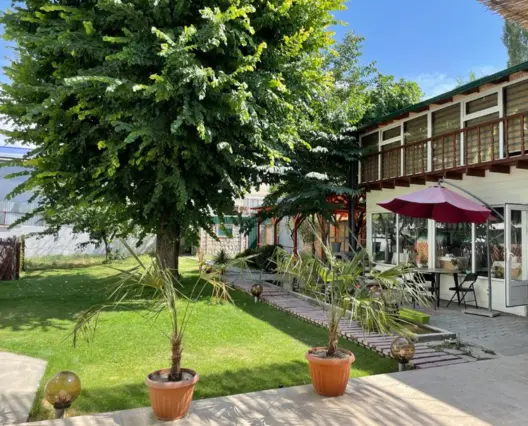
If you would rather spend time outside the city than take another urban walk, consider Kara-Koy in the Nookat district of Osh Region. There are holiday bases here: plan your visit around time at your chosen property rather than a long sightseeing checklist.
The Meiman team has observed visitors arriving here from Uzbekistan too. For a family or group trip, check accommodation, meals, whether day visits are possible and how to reach the property. Compare the total cost for your group: a cottage price and a per-person price are different things.
Choose Kara-Koy instead of Uzgen if a stay outside the city appeals more than the architectural complex. Confirm arrangements with your chosen property before deciding whether to return to Osh that evening or stay overnight.
Arslanbob: the walnut forest
If you can extend your trip and stay overnight, consider Arslanbob. It is a village at 1,600 m surrounded by 11,000 hectares of walnut forest — the largest walnut grove on Earth. The trees climb the south-facing slopes of the Fergana range between 1,500 and 2,000 m.
Two waterfalls are nearby: one 80 m high to the north of the village, another of 23 m to the east. September is the month to come — the walnut harvest, when the forest is being worked rather than simply looked at.
You get there through Jalal-Abad and Bazar-Korgon, half a day each way. Do not plan Arslanbob as a day trip from Osh: stay overnight, and check transport arrangements before leaving and reconfirm them locally.
Further south
For some travellers Osh is not the destination but the starting point. The Pamir Highway — more than 1,200 km of road crossing passes above 4,000 m — ends here. From Osh, a road leads into the Alay Valley. The valley itself stretches for 174 km between two ranges at an average altitude of about 3,000 m, with Lenin Peak (7,134 m) above it. The village of Sary-Tash in the valley is the junction on the way to the border.
The high country is open in summer and early autumn. If that is where you are heading, Osh is the last city with proper shops and reliable connectivity — worth planning around.
When to come
Osh sits at 963 m, and the summer is a proper southern one: the average July high is 31.2 °C. In July and August, climb the mountain in the morning.
Spring and autumn are the best seasons for the city itself: warm, with gardens in blossom or in fruit, and no need to plan around the heat. Winter is mild by Kyrgyz standards, with an average January low of −3.8 °C, but the mountain trips are out.
How to organise your days
Day one: Sulayman-Too and Osh. Climb the mountain in the morning and leave time for the museum and a walk. Spend the afternoon exploring the city without an onward journey.
Day two: Uzgen. Set aside half a day for the minaret and mausoleums, leaving the rest for the return journey and an evening in Osh. If you prefer time outside the city, choose Kara-Koy instead and confirm arrangements with your holiday base in advance.
Arslanbob: a separate extension. Allow time for the journey there, an overnight stay and the return. Do not try to fit it into the same day as Uzgen.
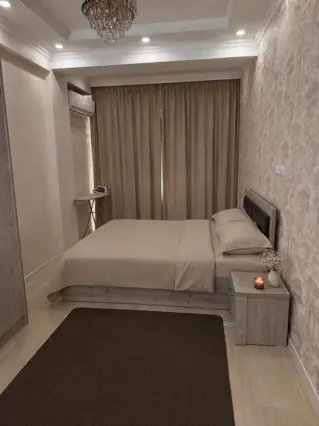
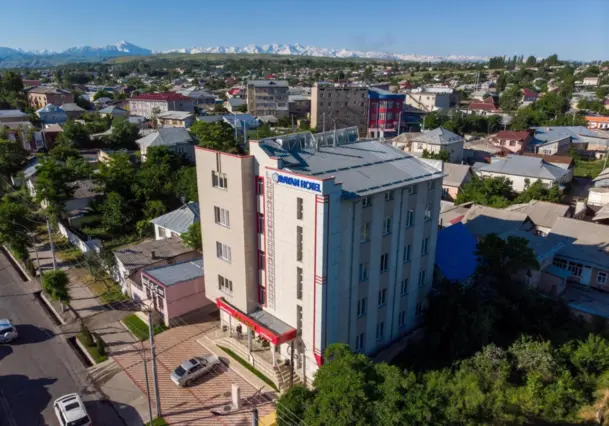
Where to stay
Checked against listings on 3 October 2026, re-checked on 8 October. At 87.45 som to the US dollar on 8 October 2026:
Option | Per night |
|---|---|
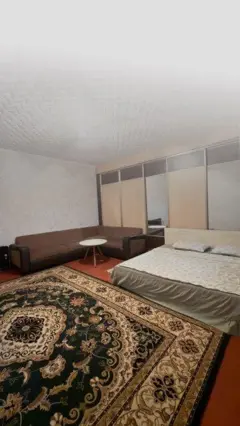
Bed in a shared room | 700–1,400 som (~$8–16) |
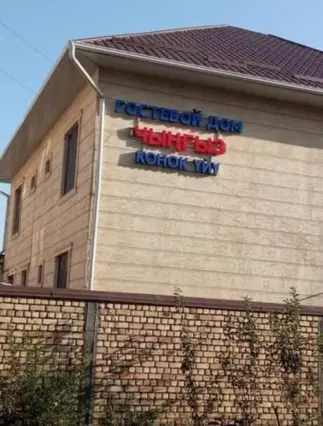
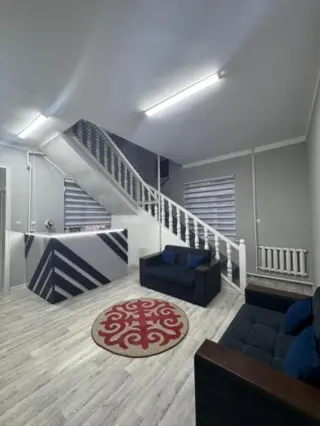
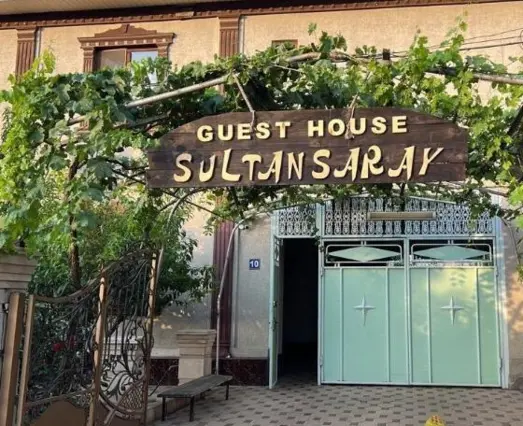
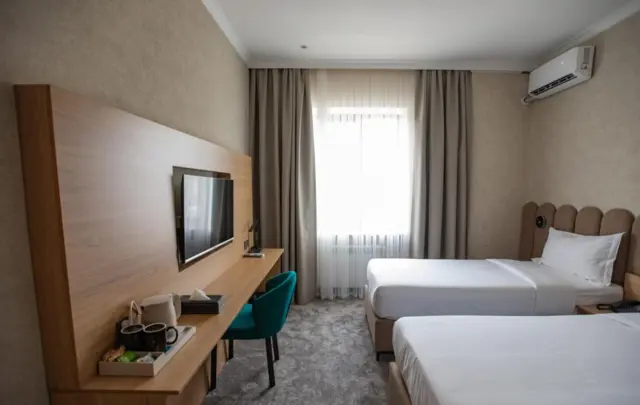
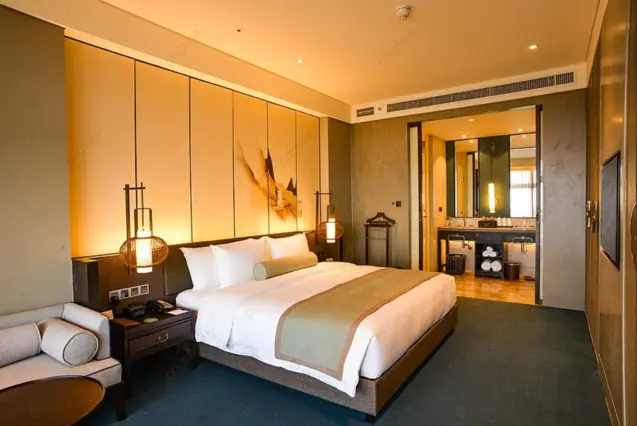
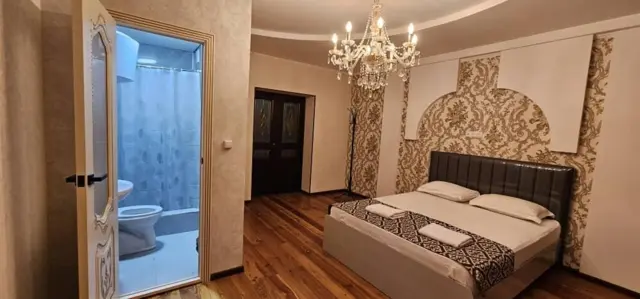
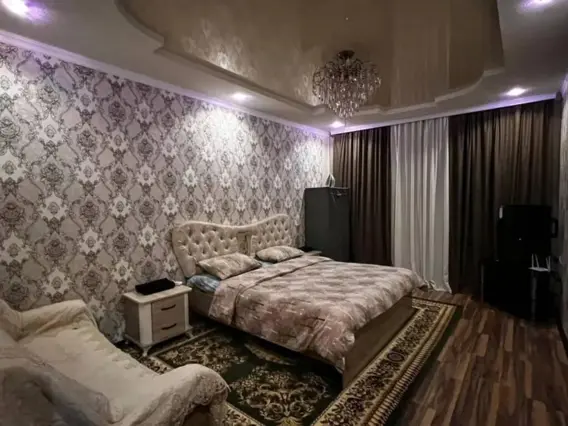
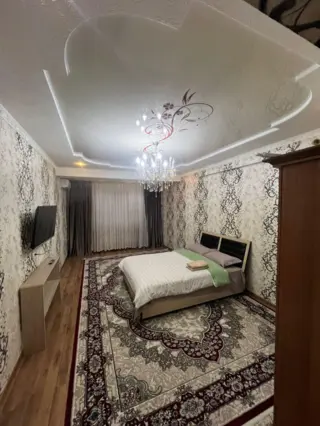
Room in a guest house | 2,000–4,000 som (~$23–46) |
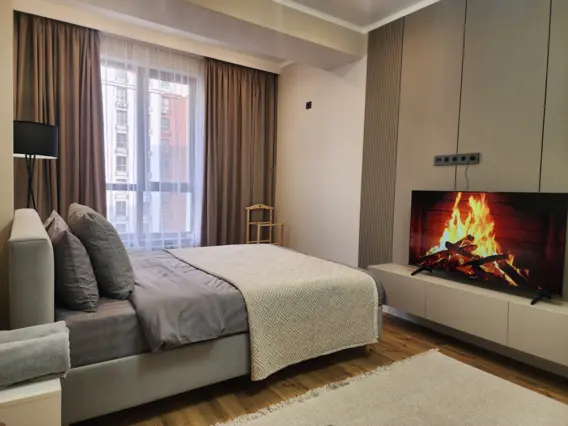
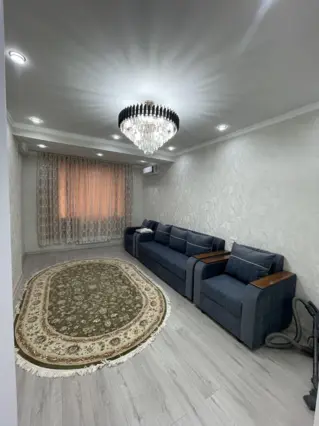
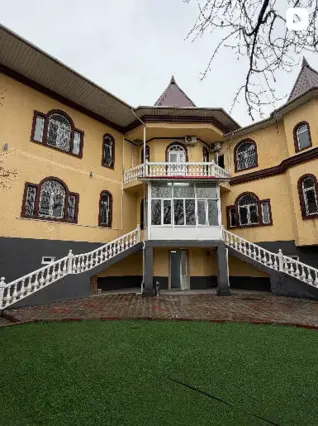
Whole apartment | 3,000–6,000 som (~$34–69) |
How to choose a location for your plans, how hotels, guest houses and apartments differ and what to ask the host — all of that is in Where to stay in Osh.
See what is available for your dates: hotels in Osh, guest houses and apartments.
Cards work in hotels and larger places in the city; outside Osh you will be paying cash, so draw som before heading out. Russian and Kyrgyz are the working languages, Uzbek is widely spoken, and English is common in traveller-facing guest houses rather than everywhere.
How booking works
Choose a place on Meiman and send a request for your dates. The host confirms it, and you then have two hours to pay the deposit — a Visa card works on the bank's secure page. The rest is paid to the host on arrival, and the booking is held by the payment rather than by the confirmation.
Details are in the payment guide.
Cover photo: Osh seen from Sulayman-Too. Photo: Radosław Botev, CC BY 3.0 PL.
'/%3e%3cpath%20fill-rule='evenodd'%20clip-rule='evenodd'%20d='M12%207.5C9.519%207.5%207.5%209.519%207.5%2012C7.5%2014.481%209.519%2016.5%2012%2016.5C14.481%2016.5%2016.5%2014.481%2016.5%2012C16.5%209.519%2014.481%207.5%2012%207.5ZM12%2014.3205C12.3047%2014.3205%2012.6065%2014.2605%2012.888%2014.1439C13.1696%2014.0272%2013.4254%2013.8563%2013.6408%2013.6408C13.8563%2013.4254%2014.0272%2013.1696%2014.1439%2012.888C14.2605%2012.6065%2014.3205%2012.3047%2014.3205%2012C14.3205%2011.6953%2014.2605%2011.3935%2014.1439%2011.112C14.0272%2010.8304%2013.8563%2010.5746%2013.6408%2010.3592C13.4254%2010.1437%2013.1696%209.97275%2012.888%209.85614C12.6065%209.73952%2012.3047%209.6795%2012%209.6795C11.3846%209.6795%2010.7943%209.92398%2010.3592%2010.3592C9.92398%2010.7943%209.6795%2011.3846%209.6795%2012C9.6795%2012.6154%209.92398%2013.2057%2010.3592%2013.6408C10.7943%2014.076%2011.3846%2014.3205%2012%2014.3205Z'%20fill='url(%23paint1_radial_14795_49782)'/%3e%3cpath%20fill-rule='evenodd'%20clip-rule='evenodd'%20d='M15.375%203H8.625C7.13316%203%205.70242%203.59263%204.64752%204.64752C3.59263%205.70242%203%207.13316%203%208.625V15.375C3%2016.8668%203.59263%2018.2976%204.64752%2019.3525C5.70242%2020.4074%207.13316%2021%208.625%2021H15.375C16.8668%2021%2018.2976%2020.4074%2019.3525%2019.3525C20.4074%2018.2976%2021%2016.8668%2021%2015.375V8.625C21%207.13316%2020.4074%205.70242%2019.3525%204.64752C18.2976%203.59263%2016.8668%203%2015.375%203ZM15.411%2018.7395C16.2942%2018.7395%2017.1412%2018.3887%2017.7657%2017.7642C18.3902%2017.1397%2018.741%2016.2927%2018.741%2015.4095V8.5905C18.741%207.70733%2018.3902%206.86033%2017.7657%206.23583C17.1412%205.61134%2016.2942%205.2605%2015.411%205.2605H8.589C7.70583%205.2605%206.85883%205.61134%206.23433%206.23583C5.60984%206.86033%205.259%207.70733%205.259%208.5905V15.4125C5.259%2016.2957%205.60984%2017.1427%206.23433%2017.7672C6.85883%2018.3917%207.70583%2018.7425%208.589%2018.7425L15.411%2018.7395Z'%20fill='url(%23paint2_radial_14795_49782)'/%3e%3cdefs%3e%3cradialGradient%20id='paint0_radial_14795_49782'%20cx='0'%20cy='0'%20r='1'%20gradientUnits='userSpaceOnUse'%20gradientTransform='translate(7.78215%2022.3861)%20rotate(-90)%20scale(17.8392%2016.5919)'%3e%3cstop%20stop-color='%23FFDD55'/%3e%3cstop%20offset='0.1'%20stop-color='%23FFDD55'/%3e%3cstop%20offset='0.5'%20stop-color='%23FF543E'/%3e%3cstop%20offset='1'%20stop-color='%23C837AB'/%3e%3c/radialGradient%3e%3cradialGradient%20id='paint1_radial_14795_49782'%20cx='0'%20cy='0'%20r='1'%20gradientUnits='userSpaceOnUse'%20gradientTransform='translate(7.782%2022.386)%20rotate(-90)%20scale(17.8392%2016.592)'%3e%3cstop%20stop-color='%23FFDD55'/%3e%3cstop%20offset='0.1'%20stop-color='%23FFDD55'/%3e%3cstop%20offset='0.5'%20stop-color='%23FF543E'/%3e%3cstop%20offset='1'%20stop-color='%23C837AB'/%3e%3c/radialGradient%3e%3cradialGradient%20id='paint2_radial_14795_49782'%20cx='0'%20cy='0'%20r='1'%20gradientUnits='userSpaceOnUse'%20gradientTransform='translate(7.782%2022.386)%20rotate(-90)%20scale(17.8392%2016.592)'%3e%3cstop%20stop-color='%23FFDD55'/%3e%3cstop%20offset='0.1'%20stop-color='%23FFDD55'/%3e%3cstop%20offset='0.5'%20stop-color='%23FF543E'/%3e%3cstop%20offset='1'%20stop-color='%23C837AB'/%3e%3c/radialGradient%3e%3c/defs%3e%3c/svg%3e)


 Osh
Osh 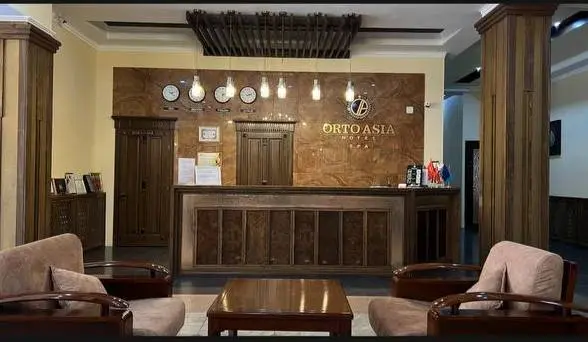






no comments